
wildfire alternative means & measures request
What is a wammr?
A Wildfire Alternate Means and Measures Request (WAMMR) allows a resident to propose an alternative way to achieve the same practical effect of defensible space regulations.
Where there are practical difficulties involved in carrying out the provisions of this code, such as properties that have unique site conditions or sensitivities that make compliance difficult, such as existing vegetation a homeowner wishes to retain, environmental concerns or physical constraints of the property. A WAMMR gives the Fire Department a way to evaluate whether an alternate approach can provide an equivalent or greater level of wildfire protection.
A WAMMR is not an exemption. Each request is reviewed individually and must demonstrate that structural ignition risk is reduced to a level consistent with the intent of the regulations.
When Might a WAMMR apply?
You may choose to consider submitting a WAMMR if:
An existing tree or landscape feature conflicts with standard Zone 0 requirements
Property-specific constraints make exact compliance impractical
You are proposing an alternate vegetation plan or other measures that still reduce wildfire risk
Your inspector or Berkeley Fire staff can help determine whether a WAMMR is appropriate for your situation and identify any additional measures required.
Approval is not guaranteed.
What an approved WAMMR typically requires
While every WAMMR is reviewed individually, most approved requests include additional maintenance, clearance, or defensible space measures to offset the proposed alternative and ensure ongoing wildfire safety.
These requirements often include:
Expanded defensible space beyond minimum distances
Clearance of vegetation and ongoing maintenance
Removal of combustible material
Implementation of voluntary home-hardening retrofits
Continued compliance with inspection requirements
Important things to know
Each WAMMR must be submitted and approved for a specific property
An approved WAMMR cannot be transferred to another site
Previously approved WAMMRs may be reviewed as examples to help inform your request
In some cases, additional evaluation or testing may be required based on vegetation type, materials, or site conditions. If testing is required, the homeowner is responsible for associated costs. An inspector can help you determine whether a WAMMR is appropriate and how to proceed.
How Vegetation is Evaluated
(WAMMR Checklist)
This checklist outlines vegetation conditions that have been consistently approved through the WAMMR (Wildfire Assessment and Mitigation Management Review) process.
It is intended to help guide residents, but it is not exhaustive. Vegetation or site conditions not reflected here may still be reviewed through the WAMMR process on a case-by-case basis.
Evaluation Criteria
Height & Vertical Clearance
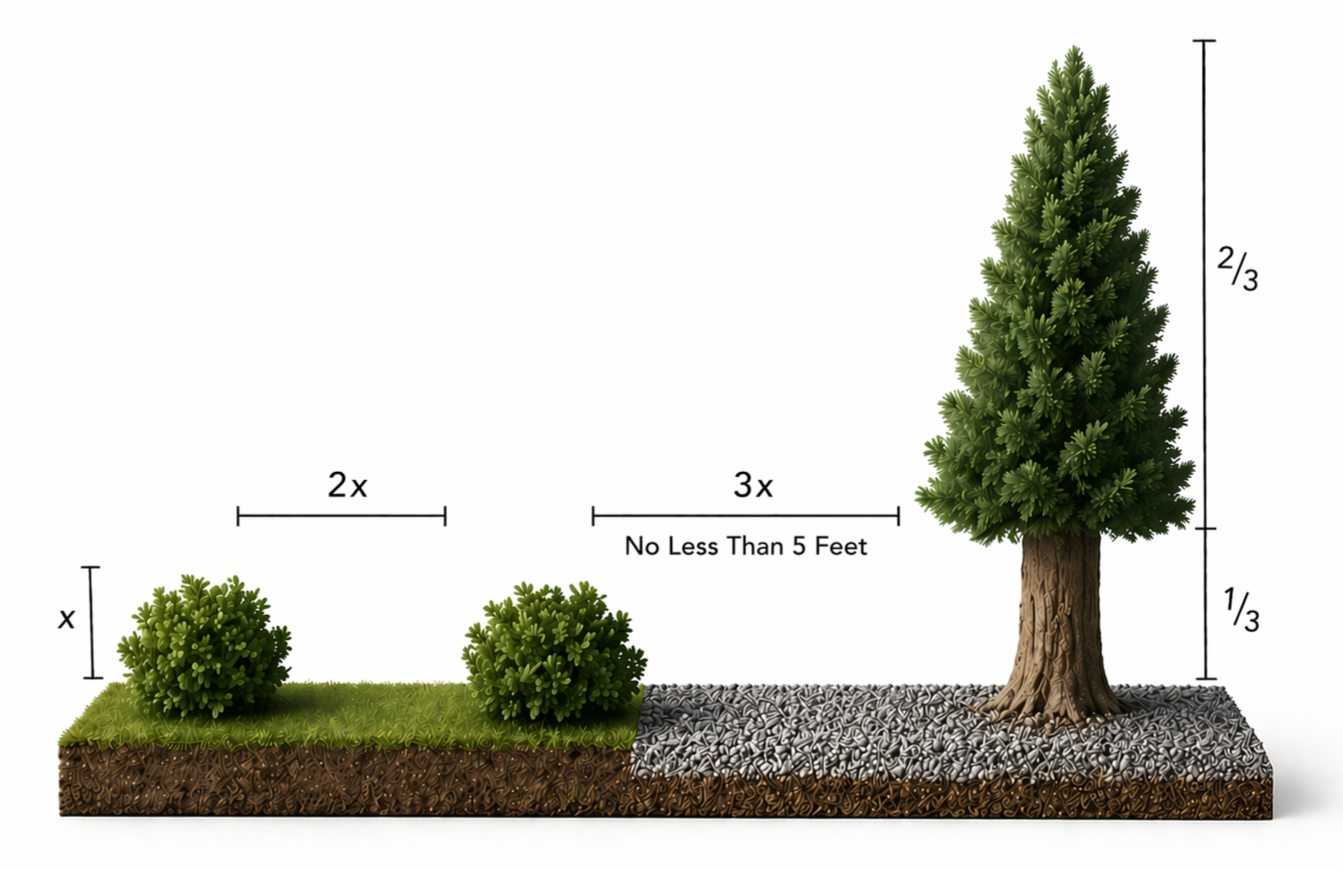
Vegetation is greater than 6 feet tall and maintained to provide vertical clearance. Lower branches are pruned following the 1/3–2/3 rule, with at least 2 feet of clearance from the ground.Vegetation Health
Plants are free of dead, dying, or decaying material that contributes to fire fuel. Trunks are clear of peeling bark and excess debris.Low Flammability Characteristics
Vegetation does not contain high levels of volatile oils, resins, or other compounds that increase flammability.
Open Canopy Structure
Branching structure supports an open, airy form that helps reduce fire intensity and limits flame spread.Spacing from Other Fuels
There is vertical and horizontal separation between vegetation and surrounding combustible materials.
Minimum spacing: 5 feet or greater.Defensible Space Compliance
The property is in compliance with defensible space requirements and has no outstanding WUI code violations.
Important Note
The above checklist is a general guideline and does not guarantee approval. Final determinations are based on site-specific conditions and overall wildfire risk.
EXample WAMMR
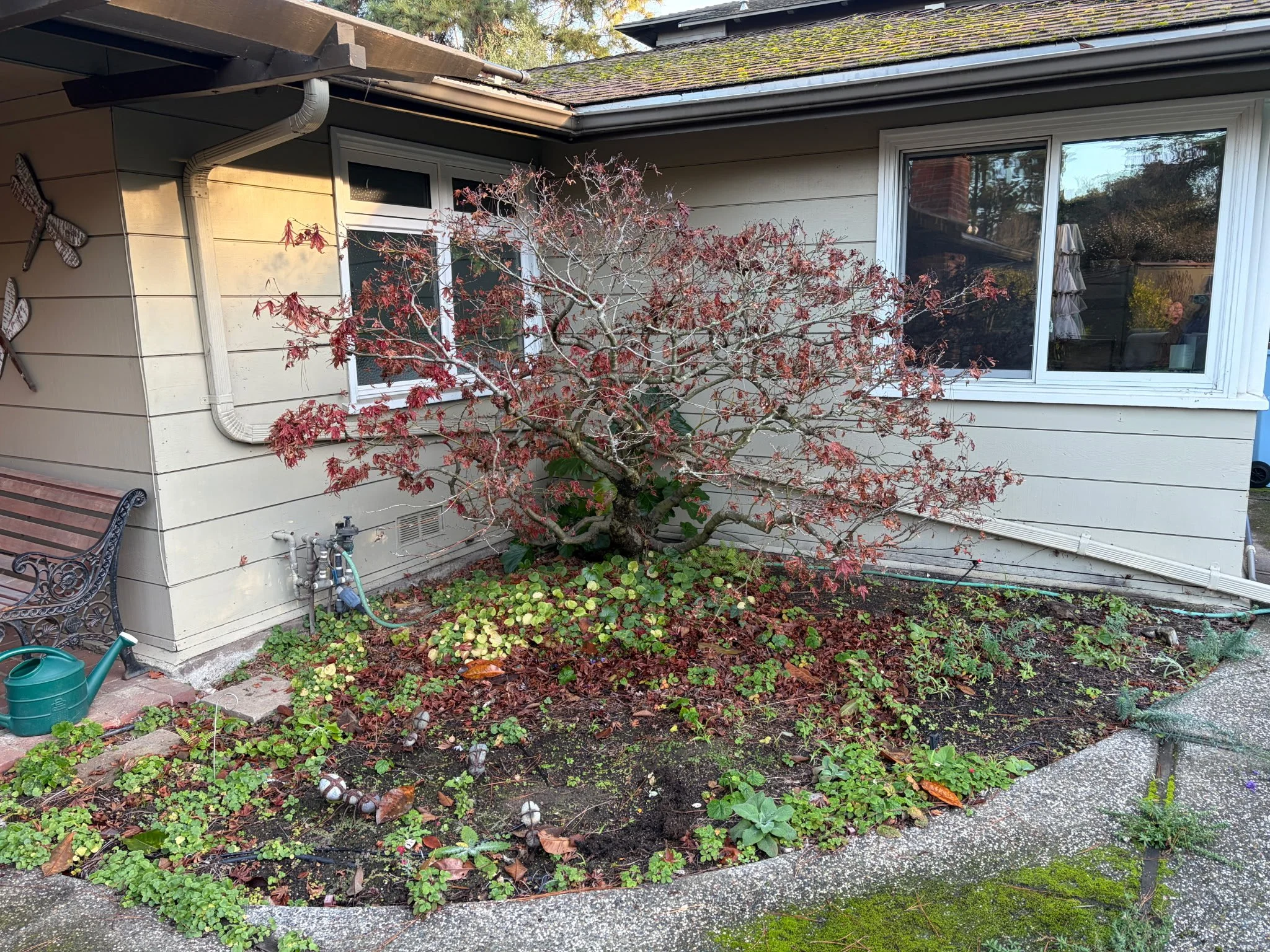
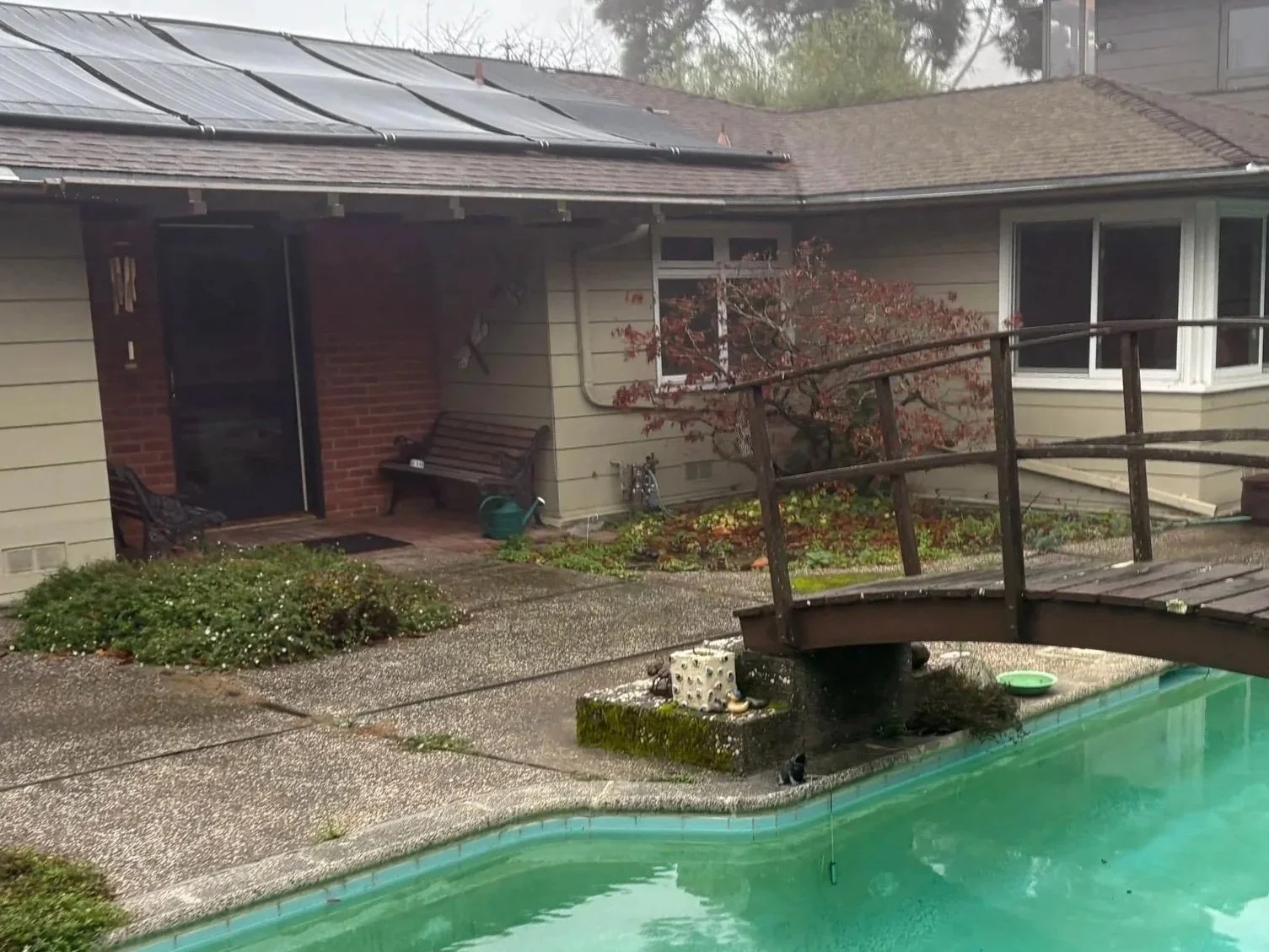
existing tree in
zone 0
Berkeley WUI Code 604.3.2.1.b
Trees:
Existing trees and shrubs are permitted in Zone Zero if:
i. Maintained free of dead material.
ii. The crown (canopy) is maintained to create:
1. Six feet (6’) above the adjacent building or structure’s roof
2. Ten feet (10’) away from chimneys and stovepipe outlets; and
3. Five feet (5’) of horizontal clearance from the sides of any Building,
Structure, attached deck, porch, landing or stairs, and hot tubs within five (5) feet of a structure.
Proposed Alternative Means of Protection
In order to maintain the subject tree, the applicant agrees to extend Zone Zero five (5) additional feet from the drip line of the tree, which, exclusively for the purpose of determining the extent of Zone Zero, will be measured by treating the tree as an appurtenance to the structure. The following standards are proposed to apply to the subject tree:
i. As the tree is greater than six (6) feet tall, at least ⅓ the height of the tree will be maintained free of foliage or peeling bark to create an air gap capable of preventing ladder fuels from forming.
ii. No ground fuels will be allowed to grow beneath the tree.
iii. All tree litter, leaves, and/or needles will be removed on a regular basis to prevent accumulations capable of acting as a receptive fuel bed.
iv. Tree limbs will be maintained to prevent contact with the structure.
v. At all times, the tree will be maintained free of dead material.
vi. Any ground fuels or shrubs in Zone 1 will be maintained to create horizontal separation of at least two times their height from the edge of the subject tree canopy.
Additional Factors to be Considered
The windows in proximity to the tree are double-pane, one being double-pane and tempered.
The applicant agrees to screen the louvered crawlspace vent near the vent utilizing ember-resistant mesh provided by the City of Berkeley via the vent mesh program outlined here: https://www.berkeleyfiresafe.org/programs/home-hardening-mesh-program
-
Berkeley Code: 604.3.2.1
Zone 0: 0 to 5 feet from any structure:
a. Maintain all areas within five (5) horizontal feet of any structure, outbuildings, attached deck or stairs, and the area under attached decks and stairs free of vegetative and non-vegetative combustible material.
i. This includes but is not limited to shrubs, vegetative ground cover, climbing vines, combustible boards, timbers, firewood, debris, synthetic lawn, wood mulch products, playsets, plastic trash and recycle cans, trellises, pergolas, shade coverings, planters, attached window boxes, privacy walls, boats, RVs, and other material that could be ignited by embers, radiant heat, or direct flame.Proposed Alternative - Green Grass:
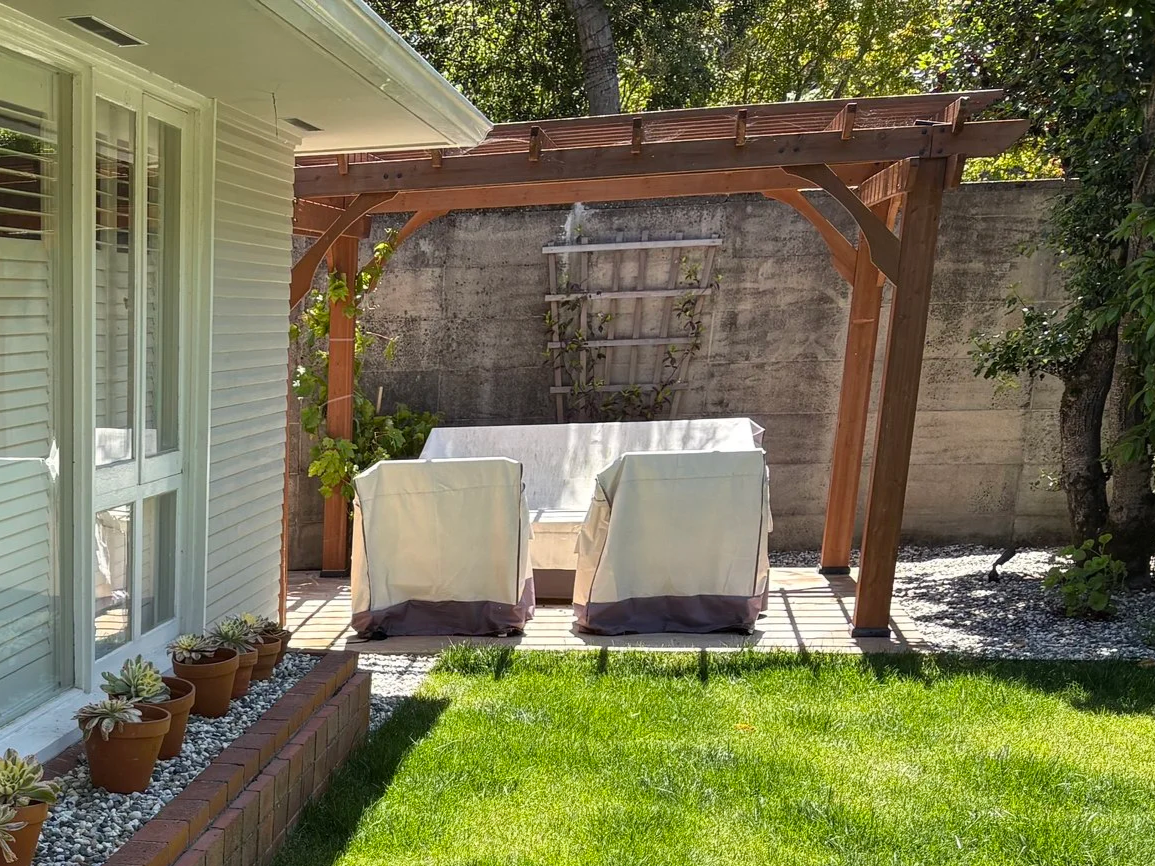
While not directly attached to the structure, for the purpose of Zone Zero, the pergola on the southwest side of the structure, will be considered part of the primary structure. As such, the resident agrees to maintain non-combustible ground cover within five feet of the posts. This will include removal of the grape vine currently growing around one of the posts, trimming of the trees on the west (street) side to maintain a six foot air gap, removal of low plantings near the trees, and maintenance of green grass as referenced below.
-
Berkeley WUI Code 604.3.2.1.b
Trees:; Existing trees and shrubs are permitted in Zone Zero if:
i. Maintained free of dead material.
ii. The crown (canopy) is maintained to create:
1. Six feet (6’) above the adjacent building or structure’s roof
2. Ten feet (10’) away from chimneys and stovepipe outlets; and
3. Five feet (5’) of horizontal clearance from the sides of any Building,
Structure, attached deck, porch, landing or stairs, and hot tubs within five (5) feet of a structure.
Proposed Alternative - Camellia:
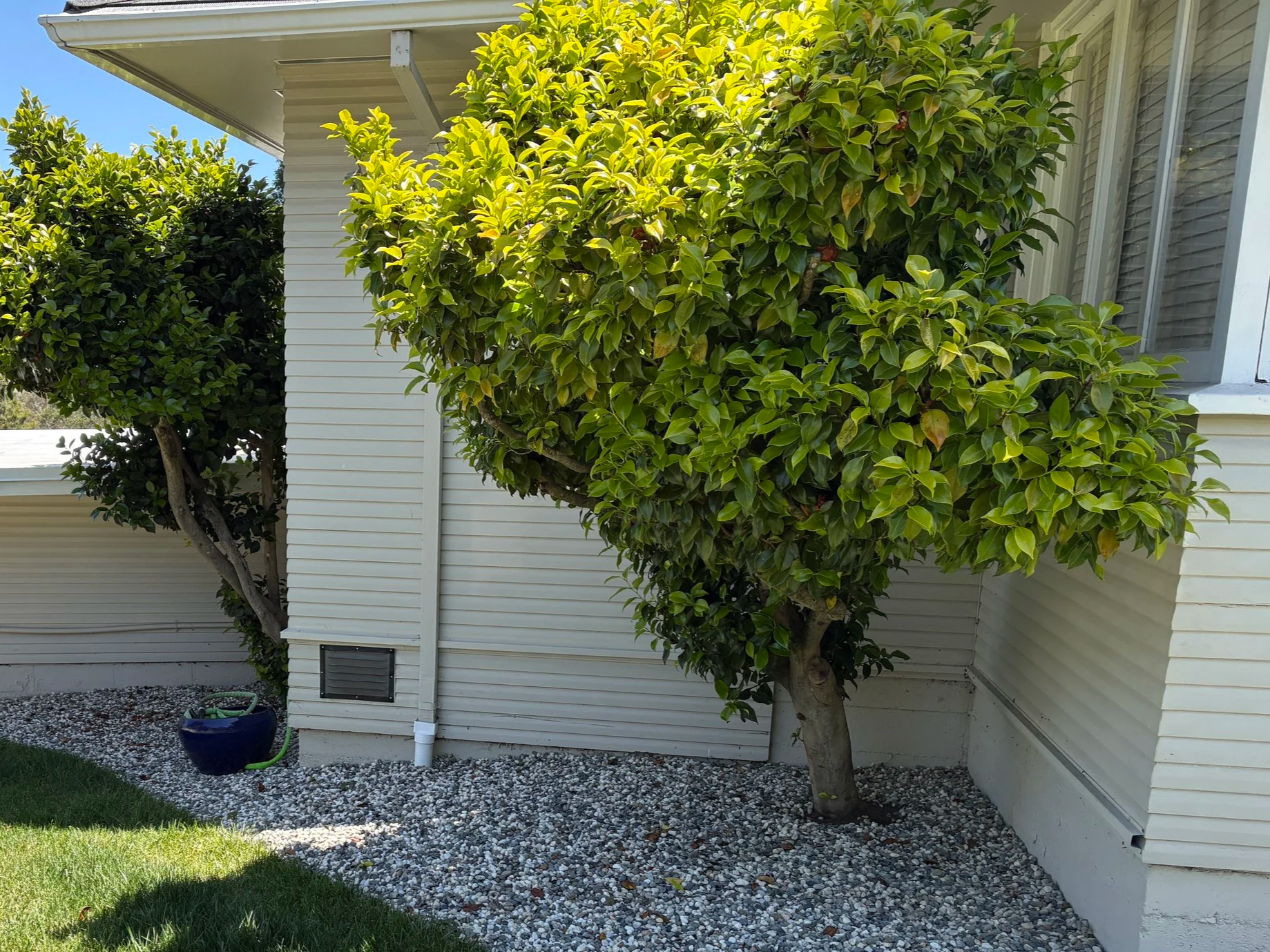
The resident agrees to maintain the two camellias adjacent to the house on the northwest side free of dead material and limbed up to create clearance between twigs and foliage of no less than 1/3 the height of the plant. The resident further agrees to maintain five feet of non-combustible ground cover, measured from the drip line, around the plants.
-
Berkeley Code: 604.3
1. Zone 0: 0 to 5 feet from any structure:
a. Maintain all areas within five (5) horizonal feet of any structure, outbuildings, attached deck or stairs, and the area under attached decks and stairs free of vegetative and non-vegetative combustible material.
Proposed Alternative - Green Grass:
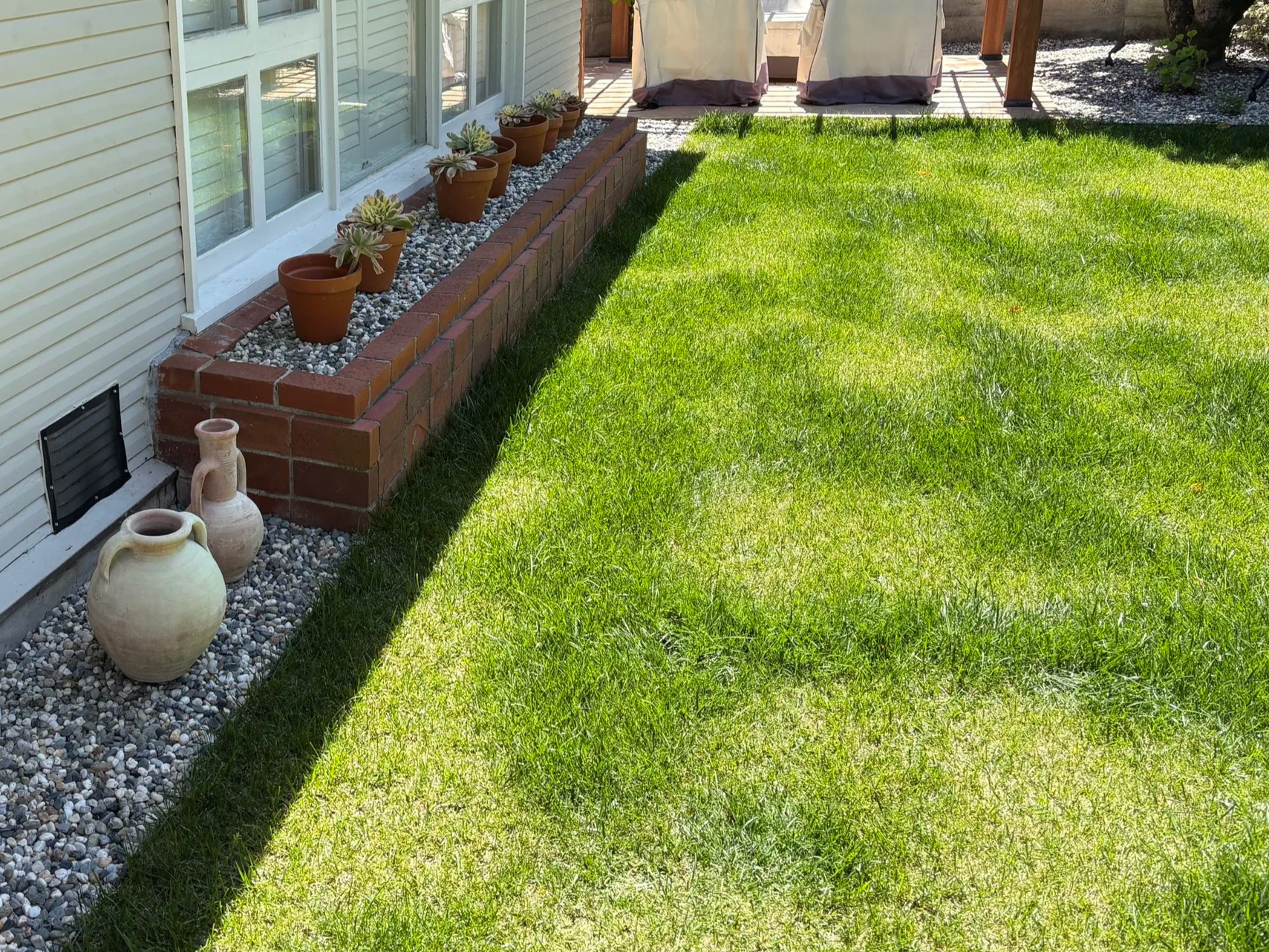
The resident agrees to maintain the irrigated grass within five feet of the structure and pergola in an irrigated state and cut to less than 4" at all times. All areas within 1.5’ of a structure will be maintained non-combustible. If future irrigation restrictions should make it impossible to maintain the grass, resident agrees to remove it. Resident agrees to submit photos verifying the irrigated nature of the grass on a monthly basis during the fall months (generally Aug-Nov) until the onset of seasonal rains and CalFire SCU declaration ending regional fire season.
Review the example WAMMR to understand how alternate requests are structured
Discuss your site conditions during your inspection or with Berkeley Fire staff
Submit a formal WAMMR application if advised