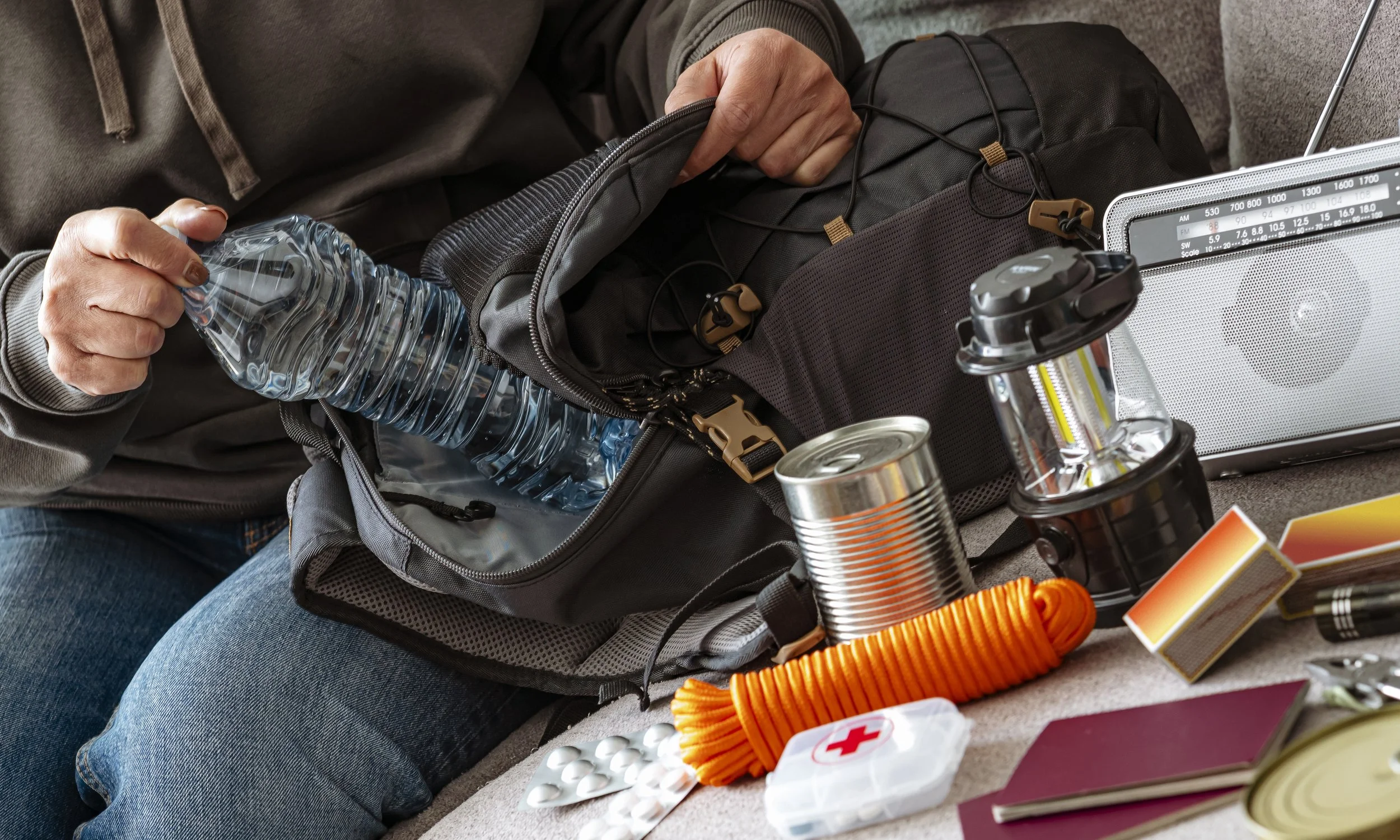
Learn how to sign up for alerts, make an evacuation plan based on your risk, and work with your neighbors to be ready for evacuation.
Evacuation Planning for Fire Weather and Wildfire
Your Evacuation Zone:
Find My Evacuation Zone
Preparedness recommendations vary by evacuation zone. Enter your address to see information tailored to your location.
Your evacuation zone is:
View Your Preparedness InfoEmergency Alerts
In an emergency, local officials may use different tools to share information and instructions. In Berkeley, there a variety of alerting tools to ensure maximum reach, including phone calls, text messages, emails, smartphone apps, Wireless Emergency Alerts (loud tone on your phone), outdoor warning system sirens, and radio stations.
Two of the main systems are opt in, which means you need to sign up in advance.
AC Alert
Sign up for AC Alert, Berkeley’s main emergency alerting system, to get alerts about addresses of interest including locations you care about – such as your home, office, or a child’s school
AC Alert can send voice alerts to phones, SMS text messages, email, and TTY/TDD messages. You can see the latest AC Alert messages in Alameda County at the AC Alert Notifications page.
Officials in Berkeley use AC Alert for all types of emergencies and weather events. Berkeley officials will send messages when there is a higher risk of wildfire, including when there are Red Flag Warnings and Extreme Fire Weather.
genasys protect app
Genasys Protect is a free smartphone app that sends real-time location-based emergency alerts and evacuation information. Save important addresses, receive notifications, and stay informed with real-time updates from Berkeley emergency officials. Allow location access and enable notifications to receive alerts tailored to your current and saved locations.
If you do not want to download the app or do not have a smartphone, this information is viewable online from any browser at protect.genasys.com.
Berkeley emergency officials will update Genasys Protect first to provide the location of Evacuation Orders, Evacuation Warnings, Shelter in Place Orders, or Advisories. Alert information in Genasys Protect is limited to around 300 characters so sign up for AC Alert for more detailed messages.
MAKE A BASIC EVACUATION PLAN
All Berkeley residents should have a basic evacuation plan. Make your basic evacuation plan using our Evacuation Planning Worksheets. Decide what you will pack, where you will go, and two evacuation routes using the worksheets. Make these decisions before an emergency so you can act quickly when every minute matters.
KNOW YOUR FIRE RISK AND PLAN ACCORDINGLY
Residents in the Berkeley hills face the highest wildfire and evacuation risk.
These zones are considered high-risk:
BER-003, BER-004, BER-005, BER-006, BER-007, BER-008, BER-009, BER-010, BER-012, BER-015, BER-016, BER-017, BER-018, BER-019, BER-020, BER-028, BER-029, BER-030, BER-031, BER-032, BER-033, BER-040, BER-057, BER-058 BER-066, BER-076, BER-077, BER-078.
Residents in high-risk zones can use Evacuation Planning Worksheets to go beyond basic planning and develop detailed evacuation plans for fire weather readiness and wildfire emergency evacuation.
KNOW WHEN FIRE DANGER IS HIGHEST
Catastrophic wildfires need the very dry and windy weather to ignite and spread. Pay attention to the weather so you know when wildfire risk is high and it is time to put your plans into action.
Residents who are subscribed to AC Alert notifications from the City of Berkeley will receive two types of fire weather alerts:
Red Flag Warning - Issued by the National Weather Service when fire weather is in the forecast in the East Bay.
Extreme Fire Weather - Issued by the Berkeley Fire Department when wildfire danger is at its highest. These alerts are rare and are only issued when there is strong confidence that dangerous fire weather will affect Berkeley. If a fire starts during Extreme Fire Weather, it may spread faster than people can safely evacuate from the Berkeley hills.
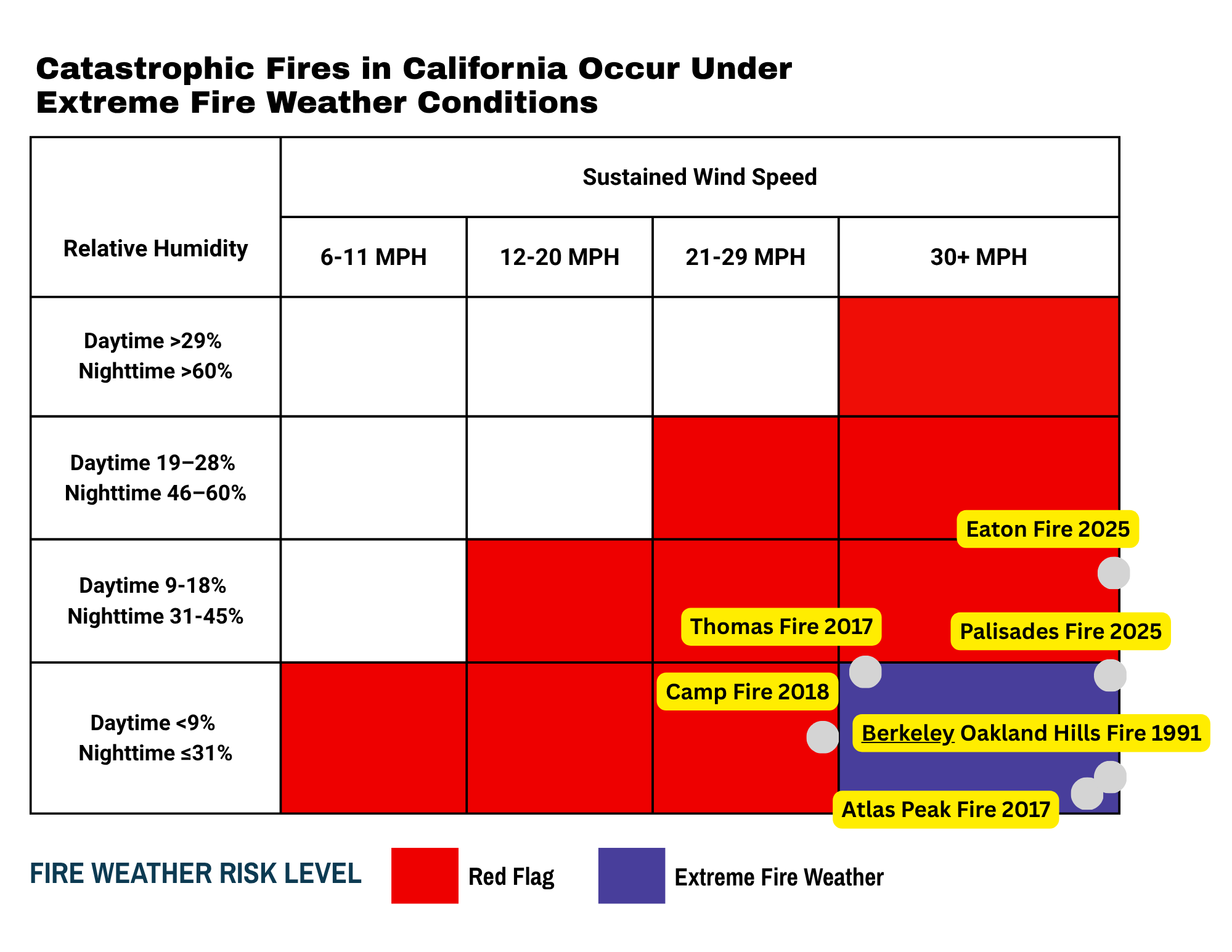
The chart below shows approximate wind and humidity levels during Red Flag Warnings and Extreme Fire Weather. California’s most deadly wildfires, including the 1991 Oakland/Berkeley Hills Fire, occurred during Extreme Fire Weather. This is why households in high-risk areas need plans for Red Flag Warnings and Extreme Fire Weather.
HIGH-RISK ZONES: MAKE A FIRE WEATHER PLAN
Residents in the high-risk zones can plan to stay safe during a Red Flag Warning and Extreme Fire Weather using the Fire Weather Planning Worksheets.
Red Flag Warning
In a Red Flag Warning, fire danger is increased. Residents in all the high-risk zones should take a few extra steps to be ready for a fire evacuation:
Be signed up and keep your phone on to receive alerts, back your cars into your driveway, and keep a go-bag by the door.
Extreme Fire Weather
Extreme Fire Weather is rare and exceptionally dangerous. If a fire starts during these conditions, it may spread faster than people in high-risk areas can safely evacuate. When Extreme Fire Weather is forecast, it is not a normal day. Residents in high-risk areas should make preparedness their priority.
Recommended actions for Extreme Fire Weather depend on which high-risk zone you live in.
Leave Early Zones (Upper Berkeley Hills and Panoramic Hill)
Residents in Leave Early Zones should leave before a fire starts and stay elsewhere.
Residents of the Upper Berkeley Hills and Panoramic Hill are in the Leave Early Zones: BER-006, BER-007, BER-008, BER-015, BER-016, BER-017, BER-030, BER-031, BER-057, BER-058.
Get Ready Zones (Middle Berkeley Hills)
Residents in Get Ready Zones should be ready to evacuate very quickly. Pack a vehicle, monitor alerts, and check in with neighbors to help each other:
Residents of the Middle Berkeley Hills are in the Get Ready Zones: BER-003, BER-004, BER-005, BER-009, BER-010, BER-012, BER-018, BER-019, BER-020, BER-028, BER-029, BER-032, BER-033, BER-040, BER-066, BER-076, BER-077, BER-078.
Note: Berkeley residents who live on and east of Claremont Ave are in the Get Ready zone.
Residents in Get Ready Zones should consider leaving early during Extreme Fire Weather if any of the following apply:
Your street has only one way in or out
Your household needs help from people outside your neighborhood to pack and leave
Your household would plan to evacuate the Berkeley hills on bike or foot
Your household prefers not to be caught in an emergency evacuation
MAKE A WILDFIRE EVACUATION PLAN
Extreme Fire Weather causes catastrophic wildfires. Less severe conditions can also produce dangerous fires. Residents in high-risk zones can plan how to evacuate if officials order you to leave with little or no time to prepare. Use the Wildfire Evacuation Planning Worksheet to help you.
-
Leave as early as possible
The safest thing you can do during a wildfire is leave early. If you live in the Berkeley Hills, leave before a fire starts—when the Fire Department declares Extreme Fire Weather. Low humidity and strong winds make this weather the most dangerous for fires.
Some weather conditions make wildfire more likely. During either of the below alert levels, everyone should keep their phone on and avoid anything that could cause sparks (such as outdoor grills or chainsaws).
Red Flag Warning: Strong winds and low humidity increase fire risk. Be ready to evacuate.
Extreme Fire Weather: Very high winds and very low humidity make fire more likely and more dangerous. If you live in the Hills, the Berkeley Fire Department recommends you leave before extreme fire weather begins.
-
Pick a few safe places you could go during an emergency, including places outside of Berkeley. Consider:
A friend’s or family member’s home
A hotel (Visit Berkeley can help you find one)
If there is a fire, emergency shelters will be opened in safe areas. They may be outside of Berkeley.
-
Plan at least two ways out of your neighborhood and be flexible. In an evacuation, you may need to use any road that’s open.
If you don’t drive, ask a neighbor now if they can help. If you have a car, reach out to neighbors about carpooling during an emergency.
In a large evacuation, roads may be blocked or unsafe to travel. Emergency transportation and people you rely on may not be able to reach you. Your neighbors will be in the best position to be able to help you.
If you live in the Berkeley Hills, avoid walking or biking if you can. Cars provide better protection against fire and traffic collisions. If you must walk or bike, leave early—when the Berkeley Fire Department declares Extreme Fire Weather.
-
Have a go-bag ready in case you only have minutes to leave.
Pack essentials like: Flashlight, wallet, phone, map, water bottle, medication, important documents, sturdy shoes and socks, and any other items your household needs to stay safe.
-
Plan ahead for anyone in your home who may need help to pack and evacuate—like children, older adults, or pets.
Make a backup plan in case normal helpers are not home when an evacuation is ordered. Work with neighbors to help each other pack and carpool out.
Never return to an evacuation zone. People have died trying to go back for others or belongings.
Never wait for someone to return home before evacuating. Make a plan now for where to meet and how to communicate if separated.
If your household is evacuating and you have children in school outside the evacuation zone, ask someone to pick them up and take them to a safe location. This can help your family evacuate faster.
-
Get hands-on support with creating your household evacuation plan by attending a training from Berkeley Ready, our emergency preparedness team. Visit our Eventbrite page for upcoming trainings and click follow to get notified when new courses are posted.
Sign up for the Berkeley Ready newsletter for email updates about disaster readiness classes and events.
WORK WITH YOUR NEIGHBORS
Preparedness is best done with your neighbors, not on your own. Talk with your neighbors about fire weather and evacuation plans including opportunities to carpool. Build a relationship strong enough that a neighbor could collect your pet, if you weren’t home during an emergency. Work together to sure everyone can receive emergency alerts, and someone in the neighborhood will check on those who might not. Monitoring fire weather conditions together and sharing important information can help your community stay aware and be ready to act. Strong neighborhood connections can make a critical difference, and the more people that participate in taking preparedness actions together, the safer we will all be.
Use our guidance and tools on meeting your neighbors and forming a neighborhood group.